
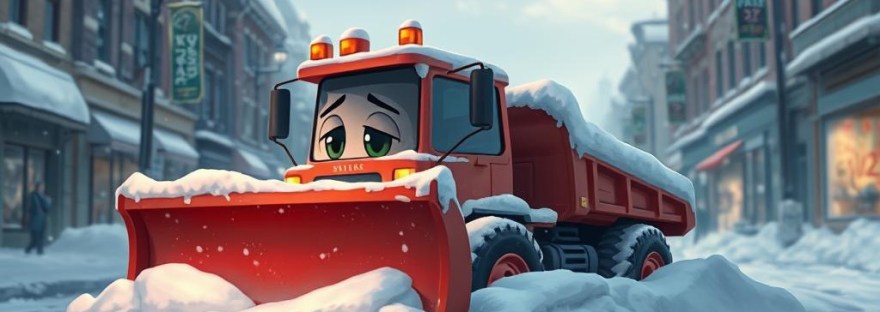
I can’t recall a winter in Fort McMurray like this. We always get plenty of snow, so that’s nothing new. What’s different is how long it’s been piling up, turning to ice, and making daily driving feel much more dangerous than usual.
Now, before I go any further, I want to be very clear: this is not a hit piece on the people running plows and graders. Anyone who has spent five minutes outside this winter knows how relentless the snowfall has been. Drop after drop. No real breaks. Long nights. Cold mornings. That kind of workload wears a person down, and the folks behind the wheel deserve respect for showing up at all.
However, recognizing how hard the job is doesn’t mean pretending the results are acceptable.
Fort McMurray’s winter maintenance zones have been wildly ineffective over the last few weeks. Priority roads have stayed in bad shape for days. Intersections are rutted and slippery. Turning lanes are hard to spot, and side streets seem ignored. This isn’t just inconvenient; it’s unsafe.
The most frustrating part is the difference between what’s promised and what actually happens. We’re told some routes will get better maintenance. We see maps, categories, and schedules. But when we drive those roads every day, the conditions don’t seem to get any better.
You can only blame the weather for so long. At some point, the system itself has to answer for how it’s working—or not working.
In theory, these winter maintenance zones are supposed to help crews focus their efforts where they matter most. And not only that, they should help ensure that parked cars are cleared in advance for more effective street clearing. But this year, they’ve felt more like a screen against criticism instead of a practical plan. When everything is labelled “challenging conditions,” nothing actually gets fixed. Snow gets packed down instead of cleared. Ice becomes permanent. And drivers are left adapting instead of trusting.
And that trust matters. People plan their routes based on these systems. Parents drive kids to school. Shift workers head out before dawn. Emergency vehicles count on predictable road conditions. When maintenance doesn’t keep up, everyone pays for it, one skid or near-miss at a time.
What makes this harder to swallow is that Fort McMurray knows winter. This isn’t a surprise climate. Snow isn’t a rare event here. We’ve handled bad winters before, and that’s why this one stands out. It’s starting to feel like we’re falling behind, not just struggling.
I don’t expect perfection. No one does. But I do expect progress. I expect to see roads improve between snowfalls, not degrade into something worse. I expect priority zones to mean something – bus routes maintained! And I expect communication that’s honest—about what can’t be done, and why. Giving yourself a pat on the back every time you manage to clear a street and posting about it on social media is not it.
I’ll also be one of the first to admit, I don’t have the answer to the problem. I’m not filled with some unlimited wisdom that will help me fix it or make it better. And maybe, on that note, I’m as much a part of the issue.
But…
What I DO know is that if the current system can’t handle winters like this, then it needs to change. Maybe that means more equipment, new schedules, or rethinking the zones. Something has to give, because saying “this is just how it is” isn’t good enough when people are sliding through intersections and bracing themselves every time they leave home.
Too many people are being left stranded. Too many people are getting hurt.
The first step in fixing a problem is admitting you have one in the first place.
Fort McMurray deserves better than survival driving. We deserve roads that feel managed, not abandoned to the weather. Winter is hard enough without feeling like we’re doing it alone.
Let’s do better.

 The CJBuzz