
Burnout doesn’t happen all at once.
It doesn’t just suddenly show up with a nametag.
It moves in slowly. It pulls up a chair. It starts answering questions for you.
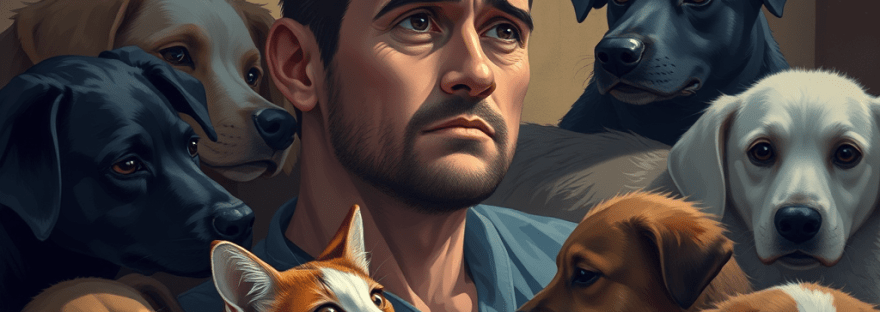
I work in animal care. A job built on compassion, patience, and showing up even when it hurts. Most days, it’s a privilege. But some days, it can be unbearable.
During the COVID-19 pandemic, the world shrank. The work didn’t. We kept coming in while everything else shut down. The rules changed daily. The fear weighed on us. The animals still needed feeding. Cleaning. Comfort. Wave after wave of new arrivals. The sick. The injured. The homeless. We carried grief that wasn’t ours and guilt that somehow was.
Then, just a few short years after the 2016 wildfire, there was the flooding in Fort McMurray. Water where it shouldn’t be. Panic where calm was required. Evacuations. Loss. The feeling that nothing was solid anymore. We showed up anyway. Because that’s what you do in this line of work. You show up when it’s hard. Especially when it’s hard.
Somewhere along the way, I stopped noticing how tired I was. Not “need a nap” tired. Soul tired. The kind that changes how you speak. How you listen. How quickly frustration finds its way out of your mouth.
Burnout didn’t make me a bad person.
But it did make me a different one.
I became shorter. Less patient. More reactive. I told myself that I was just stressed. That everyone was. That this was normal. I hid behind the idea that the work was important, so my behaviour didn’t need to be examined.
That part is on me.
Burnout explains things.
It does not excuse them.
There were moments I wish I could take back. Words that landed heavier than I meant. Days when I wasn’t the leader, coworker, or human being I wanted to be. I can hold compassion for what I was carrying while still owning the weight of what I put down on others.
That’s a hard thing to sit with. But it matters.
The animal care industry still doesn’t talk enough about this. About how caring too much can hollow you out. About how being needed every day can make you forget you’re allowed to need things too. About how easy it is to confuse endurance with strength.
We praise resilience, but rarely ask about the cost.
Burnout doesn’t always look like collapse. Sometimes it looks like competence. Like reliability. Like being the one who always stays late and never says no. Until one day you don’t recognize yourself anymore.
If you’re reading this and feeling that tightness in your chest, that constant edge, that quiet dread before another shift—please hear this part.
You are not weak.
You are not broken.
And you are not alone.
But you are responsible. Responsible for noticing. For asking for help. For repairing what needs repairing. For resting before the damage spreads.
I’m still learning how to do that. Still learning how to slow down without guilt. How to apologize without excuses. How to care deeply without burning myself to the ground.
Some days I get it right.
Some days I don’t.
But I am getting better at it. Every day.
If this reaches someone who feels unseen in their exhaustion, I hope it gives you a moment to breathe. And maybe the courage to say, out loud or quietly to yourself: something has to change.
Because the work matters.
The animals matter.
And so do you.


Beautiful, powerful and relevant beyond measure.
LikeLiked by 1 person