I don’t think I hate politics.
I think I hate what we’ve done to it.
There is a difference.
Politics should matter. It decides things that affect our lives. Taxes. Health care. Education. Housing. Roads. Jobs. Crime. The environment. The cost of living. The places we live and the kind of country we leave behind.
These are not small things.
And yet somehow, a good chunk of our political conversation now happens through badly made memes posted by someone’s uncle.
That’s where we are.
A picture. A quote somebody never said. A number with no source. A screenshot of a headline from a website nobody has ever heard of. Maybe a politician’s face badly pasted onto something for good measure.
Share. Done.
Apparently we’ve solved democracy before lunch.
And I am tired of it.
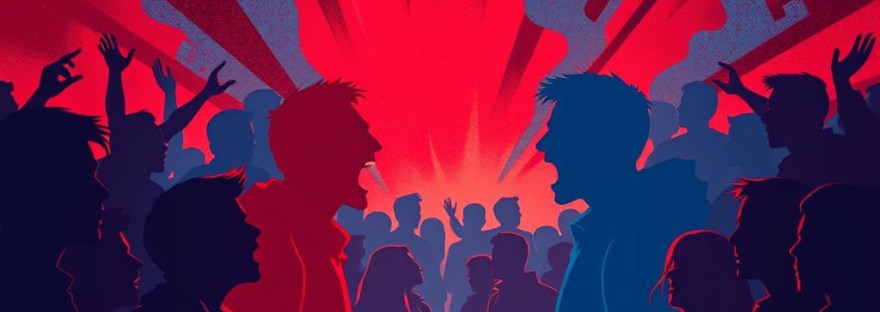
I’m tired of politics being treated like a hockey game where we pick a jersey and spend the next four years booing the other team. I’m tired of every issue being squeezed into two choices. Red or blue. Left or right. With us or against us.
Life isn’t that simple. Neither is governing.
You can agree with a politician on one thing and think they’re completely wrong about another. You can support an idea from a party you don’t normally vote for. You can criticize someone you voted for. You can even change your mind when you learn something new.
That’s not weakness. That’s thinking.
Somewhere along the way, though, we started treating changing your mind like betrayal. We started building political identities instead of political opinions. Once the jersey goes on, everything your side does needs to be defended and everything the other side does needs to be attacked.
Even when it makes no damn sense.
And social media loves it.
Anger travels faster than context. A nasty one-liner gets more attention than a thoughtful explanation. Nobody is making a viral meme about the boring details of municipal infrastructure funding. Nobody is screaming at their phone because they just read all 94 pages of a proposed piece of legislation and have some concerns about subsection 14.
But maybe we should be doing a little more of that.
Not the screaming part. The reading part.
Because policy matters. Plans matter. Budgets matter. Details matter.
What someone is actually proposing to do should matter a hell of a lot more than whether they came up with a clever nickname for the person standing across from them.
And yes, politicians are guilty of this too.
Maybe especially guilty.
Too much political messaging now seems to be built around telling us why the other person is terrible. Why they’re dangerous. Why they’re stupid. Why they’re ruining everything.
Fine.
What are you going to do?
What’s the plan? How much will it cost? What happens if it doesn’t work? Who does it help? Who gets left behind? What are you willing to compromise on? Can you work with someone you disagree with long enough to get something useful done?
Those seem like reasonable questions to ask people who want to run a country, province, state, city or town.
Instead, we get insults. We get slogans. We get thirty-second clips chopped out of longer conversations. We get people yelling at each other on television while a little banner at the bottom of the screen tells us that democracy itself may explode before the next commercial break.
Then we act surprised when people say they don’t follow politics anymore.
Can you blame them?
Following politics shouldn’t require wading through a swamp of bullshit every morning just to figure out what actually happened.
And I don’t think the answer is for everyone to agree. God, no.
Disagreement is important. Debate is important. Different ideas are important. I’d be more worried about a society where everyone agreed on everything.
But disagreement doesn’t have to mean hatred. Compromise isn’t surrender. Cooperation isn’t weakness. And someone who votes differently than you is not automatically stupid, evil, brainwashed or your enemy.
That doesn’t mean that you should abandon what you believe. It doesn’t mean splitting every issue down the middle and calling it fair. It means accepting that governing millions of people isn’t going to look exactly the way any one of us wants it to.
They might be wrong.
You might be wrong.
Imagine that.
I know. Horrifying.
I don’t want less political conversation. I want better political conversation.
I want us to ask questions before sharing things. I want us to care where information came from. I want politicians to tell us what they plan to build instead of spending all their time pointing at what the other guy broke.
I want room for complicated answers. I want room to say, “I don’t know.” I want room to say, “That’s actually a good idea,” even when it came from someone we don’t particularly like.
Mostly, I want us to grow up.
Because these decisions matter. They matter too much to be reduced to memes and team colours.
We don’t need to agree.
We probably never will.
But surely we can do better than this.


